I recently read and reviewed “The Process: Six Mechanics of Achievement: Inner Work for Outer Results”, and one of the things I most appreciated about it was the author’s deep understanding of what achievement really requires.
This is not a shallow book about productivity, hustle, or forcing oneself into constant output. It is a thoughtful, well-researched exploration of motivation, discipline, internal locus of control, execution, and responsibility. It looks closely at the inner mechanics behind outer results, which is something I found both useful and confronting.
One idea that particularly stayed with me was the author’s discussion of planning, visualising, and actually achieving a goal. The book makes the excellent point that the pleasure of planning can sometimes become its own reward. We can enjoy the sense of movement before we have actually moved. We can feel productive because we have set intentions, made lists, imagined outcomes, and pictured the future version of ourselves who has already achieved the thing.
As a creative person, I recognised this immediately.
As an author and artist, I love the imaginative stage of any project. I love the gathering of ideas, the pattern-making, the notebooks, the beautiful possibility of the thing before it has become difficult. But creative work, like any meaningful achievement, eventually asks for more than inspiration. It asks for action. It asks for repetition. It asks us to return to the work when the initial glow has faded.
That is where the book’s insights felt especially relevant to both creativity and entrepreneurship.
In one passage, the author reflects on the long, often uneven journey of entrepreneurs, authors, musicians, and artists. These are fields that “rarely yield results in a linear fashion.” That line resonated with me because it is so true of creative life. So much of what we do happens before there is any visible reward. We make work that no one has seen yet. We practise skills that are not yet marketable. We write drafts that may never be published. We paint, revise, discard, begin again, rethink, rebuild, and carry on.
The author also notes that creative challenges often come before “unexpected breakthroughs.” I loved that idea because breakthroughs often look sudden from the outside, when in reality they are usually the result of long devotion, many failed attempts, and a quiet willingness to keep going.
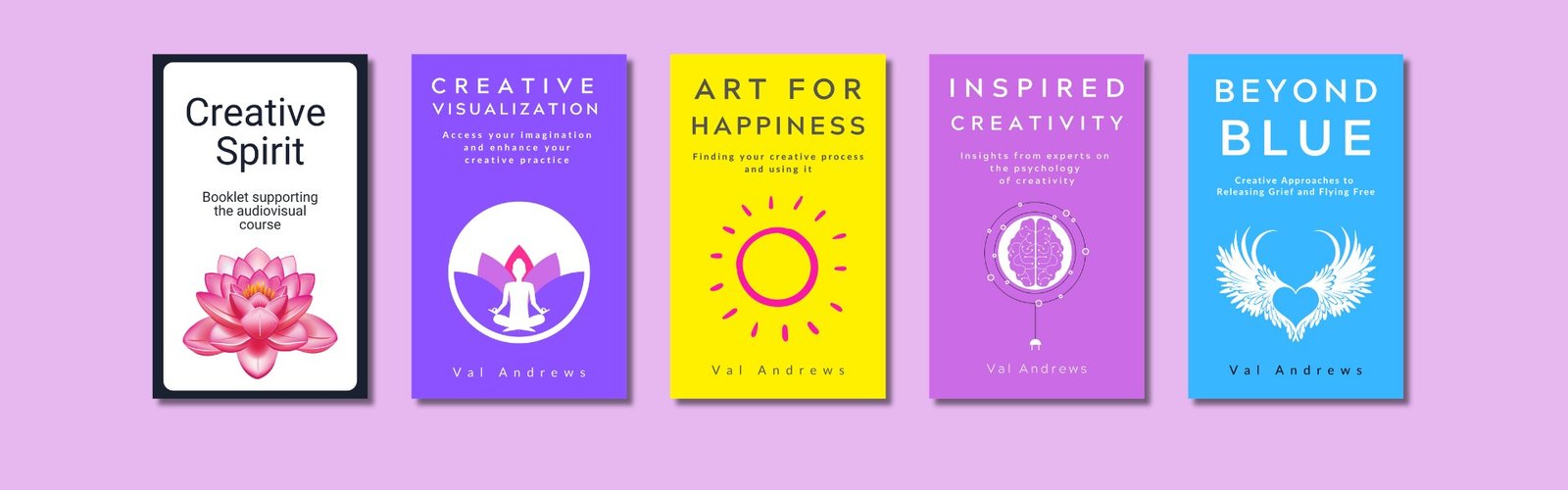
This is also one of the central ideas behind my own book, “Art for Happiness: Finding Your Creative Process and Using It”. I wrote the book for writers, artists, and creative people who want to reconnect with their own creative process in a deeper, more nourishing way. It is a book about inspiration, yes, but not inspiration as something vague or unreliable. It is about learning how to access creativity deliberately, how to work with memory, dreams, archetypes, active imagination, meditation, synchronicity, and the subconscious mind, and how to turn those inner resources into real creative practice.
Many people think of creative work as something magical, and in many ways it is. But magic still needs a container. A creative life needs practices, rituals, habits, courage, feedback, experimentation, and a willingness to keep showing up even when the results are uncertain. The joy of creativity does not remove the need for discipline. Instead, joy gives discipline something worth serving.
That is why “The Process” felt so complementary to my own thinking. It reminded me that achievement is not only about the outer result. It is also about the inner posture we bring to the work. Are we waiting for inspiration, or are we building a practice that allows inspiration to find us already at the desk, the easel, the notebook, or the studio?
In Art for Happiness, I explore ways to spark creativity, find new sources of inspiration, work with stream-of-consciousness writing and drawing, access the subconscious, use creative visualisation, and integrate the intellectual, emotional, and spiritual aspects of the creative self. But beneath all of that is a simple truth: the creative process becomes most powerful when we actually use it.
That may mean writing the imperfect page, sketching the strange image, following the odd dream, revisiting childhood memory, accepting useful feedback, or making something that may later be discarded. None of this is wasted. Every experiment teaches us something. Every discarded canvas, abandoned draft, or unfinished idea may still be part of the larger process that leads us somewhere better.
Creative breakthroughs rarely arrive in straight lines. They are often born from patience, curiosity, frustration, repetition, play, failure, and faith. And perhaps that is why books like “The Process” matter. They remind us that achievement is not separate from inner work. It begins there.
For creative people, that inner work may be the difference between endlessly dreaming about the art we want to make and finally bringing it into being. Learn more from my free guide, CREATIVE SPARK