Creativity is often treated as something that belongs to artists, writers, musicians, and makers. But many of the processes involved in creativity are also familiar territory for therapists, coaches and wellbeing practitioners who help people reflect, grow, build confidence, explore identity, and move through periods of feeling stuck.
Questions such as What is getting in my way? What do I really want? What would I try if I were less afraid of failure? What helps me feel more confident? are creative questions as much as they are developmental ones.
Creativity and reflective practice
Creative work asks us to pay attention so we can notice patterns, question assumptions, tolerate uncertainty, experiment, take risks, and make meaning from experience. Those same capacities are valuable in many forms of reflective practice.
A therapist may help a client explore the beliefs beneath a recurring barrier. A coach may help someone identify what they really want and what is stopping them from acting. A wellbeing practitioner may encourage greater awareness of emotional, physical, or spiritual needs.
Creative practice can complement these processes by providing another way into reflection. Sometimes people find it easier to explore an idea through imagery, writing, visualization, metaphor, or imaginative questioning than through direct analysis alone.
What Creative Spirit explores
The Creative Spirit course brings together creativity, reflection, meditation, confidence, and wellbeing. Course participants explore practical ways to:
- identify barriers such as fear of failure, negative self-talk, and lack of confidence
- use guided visualization and reflective questioning
- understand personal motivations, values, and creative ambitions
- develop greater awareness of the conditions that support confidence and creative flow
- access inspiration more readily
- explore the relationship between creativity and wellbeing
- turn reflection into practical action
- build habits that support a sustainable creative practice
For therapists, coaches and wellbeing practitioners, some of these topics seem to provide useful prompts or exercises that can be adapted appropriately within their own work. Which is probably why I have received some of the most positive feedback on the course from this group of professionals. They have consistently told me they are using the visualization techniques, reflection exercises and practical tools in their work with clients.
The practitioner benefits too
As a therapist, coach or wellbeing practitioner, you spend a great deal of time holding space for other people. Having a creative practice of your own can offer a completely different kind of space, one in which you are not solving somebody else’s problem but restoring your own wellbeing though creative experimentation, play and reflection. And because creativity often involves uncertainty, curiosity, and trying things without knowing exactly where they will lead, it can also strengthen some of the very capacities practitioners encourage in others.
What you receive
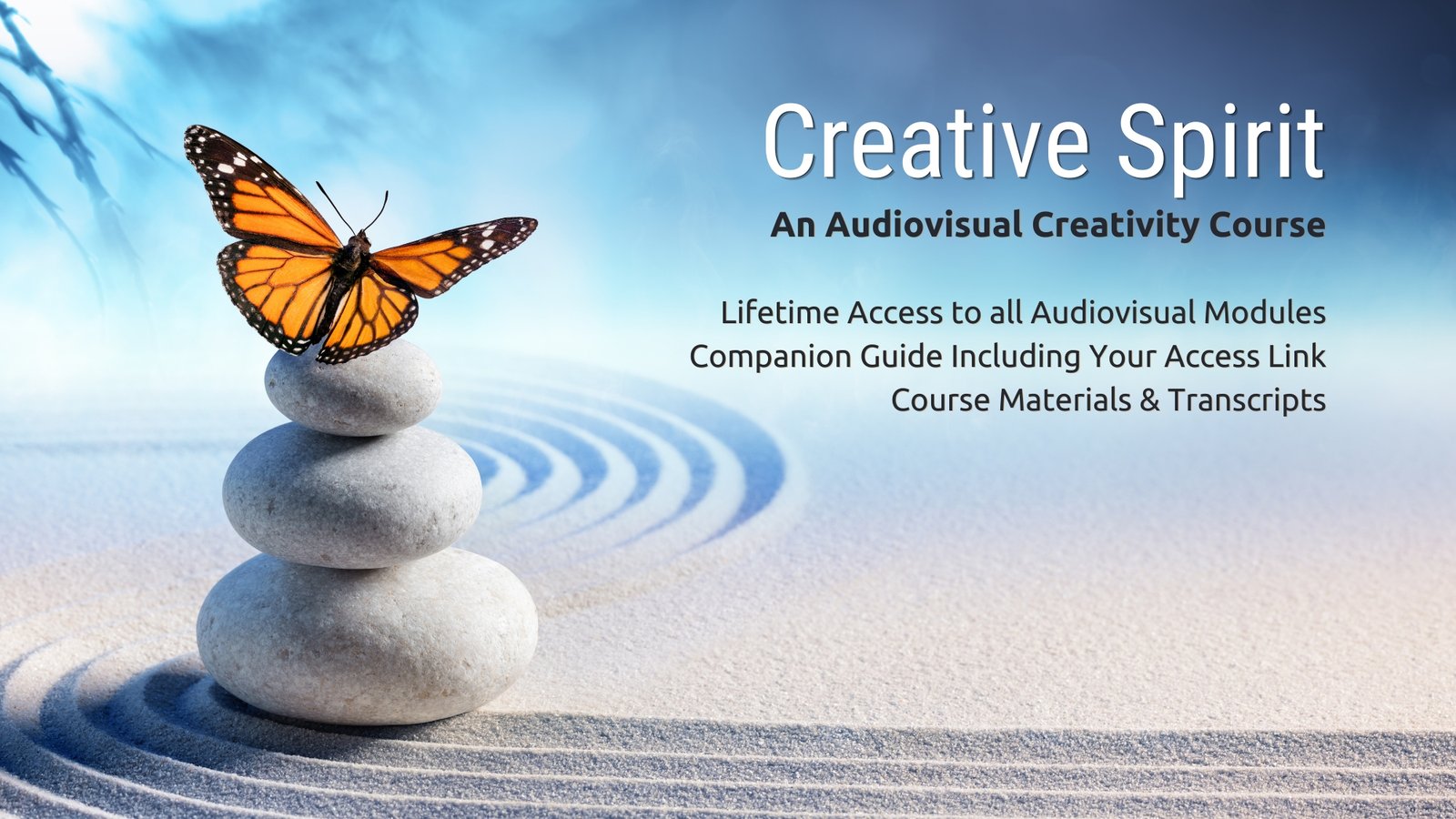
Creative Spirit includes lifetime access to:
- 10 core audiovisual lessons
- A Companion Guide
- Course Materials & Transcripts
You can work through the course sequentially or dip into specific topics that feel particularly relevant in the moment. Best of all, you can return whenever your own creative life or professional practice needs a fresh perspective.
If your work involves helping people reflect, grow, regain confidence, or move through personal and creative blocks, check out Creative Spirit at this link.
And if you are unsure whether the course would be relevant to the kind of work you do, you are very welcome to contact me. I would rather tell you honestly whether I think it is a good fit than persuade you to buy something that is not.
Val Andrews,
Course Creator | Founder of Opal Tree Press
info@opaltreepress.com
A final note
I’m sure this goes without saying, but the Creative Spirit course is not clinical training, therapy training, nor a professional qualification. It is a creativity and personal-development course. Any ideas or exercises you obtain from Creative Spirit can be adapted appropriately to your own professional practice and ethical framework.