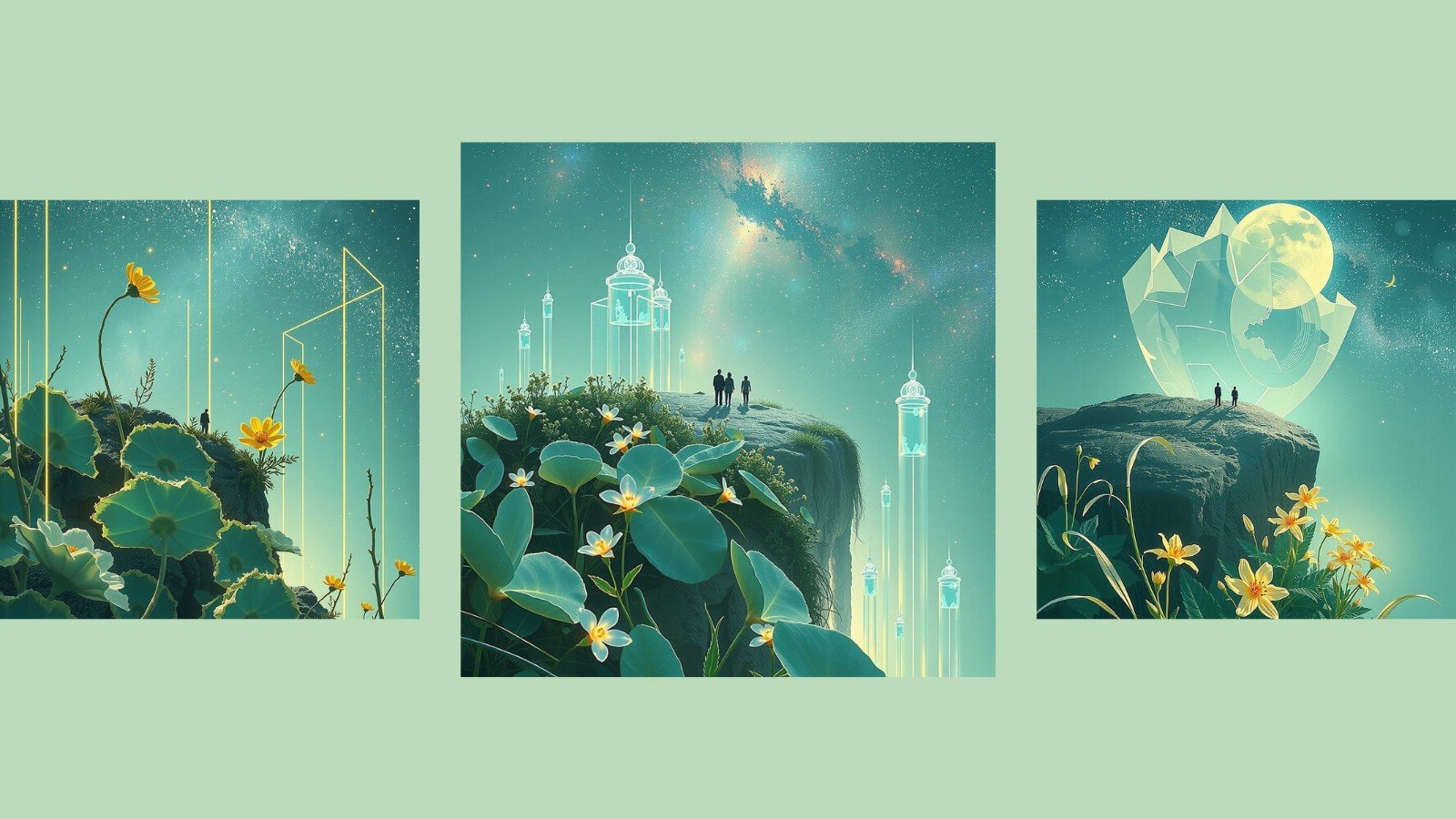
I’ve been thinking a lot lately about the moment before a scene becomes language. You know the moment, right? When it only exists first as atmosphere, colour, texture, light, or place. This short essay explores how visual inspiration can help fiction writers find the emotional weather of a scene before the words arrive.
Sometimes, a writer knows the feeling of a scene long before they know exactly what happens in it. There may be no dialogue yet. No clear action. No tidy sequence of plot events. But there is a temperature. A colour. A quality of light. A sense of scale. Perhaps the scene feels damp, gold, ancient, claustrophobic, luminous, abandoned, overgrown, or charged with some quiet form of danger.
This is where visual inspiration can become surprisingly useful.
For writers, images are not simply decorative extras. They can be working tools. A single atmospheric image can hold several layers of story information at once: setting, mood, genre, emotional tone, possible history, even the kind of characters who might belong there. Before the scene becomes language, the image can help the writer find its weather.
Visual inspiration is especially powerful when writing fiction that depends on atmosphere: fantasy, science fiction, magical realism, gothic fiction, speculative fiction, romance, mystery, mythic retellings, or any story where place is more than a backdrop. In these kinds of stories, setting often behaves almost like a character. It shapes the emotional meaning of what happens.
An image can help a writer find that meaning.
A strange tower beneath a teal sky might ask: who built this? Is it sacred, abandoned, scientific, alive? A forest of luminous flowers might ask: is this beautiful, dangerous, healing, or all three? A half-ruined palace might suggest loss, inheritance, memory, secrecy, exile. The image does not answer the story question. It provokes it.
That is the point.
Visual moodboards can also help writers maintain tonal consistency. This is particularly useful when working on a novel, series, or story world over time. It is very easy to drift from the original emotional atmosphere of a project. A moodboard can act as an anchor. It reminds the writer: this world is cold and ceremonial; this one is lush and uncanny; this one is intimate and candlelit; this one is vast, metallic and haunted by distance.
Images can also help with setting without encouraging over-description. A writer does not need to reproduce every detail from an image on the page. In fact, it is usually better not to. The image is not a blueprint. It is a tuning fork. It helps the writer understand the emotional logic of the place, so that the written details can be chosen with more precision.
Instead of describing everything, the writer can ask: what is the one detail that carries the mood? The tilted lantern. The cracked mosaic. The impossible blue horizon. The doorway covered in vines. The sound of water somewhere below the floor.
Perhaps most importantly, visual inspiration does not replace imagination. It wakes it up.
A good image gives the mind somewhere to begin. It offers a threshold. The writer steps through, and the story starts asking questions. Who lives here? What happened before the scene began? What is hidden? What does this place want? What does the character misunderstand about it?
That final question is often the richest one.
I have been exploring this in my own creative practice through WorldsInBloom, where I create atmospheric digital art for writers, worldbuilders, journal keepers and creative projects. I have also made a free guide, “10 Ways to Use Atmospheric Digital Art”, for anyone curious about using images in moodboards, journals, interiors, story development and creative inspiration.
Download the free guide from my Gumroad account
The sci-fi fantasy art bundle shown at the top of this post is also available from my Etsy shop, WorldsInBloom, for personal moodboards, printable wall art and creative inspiration. Find it here